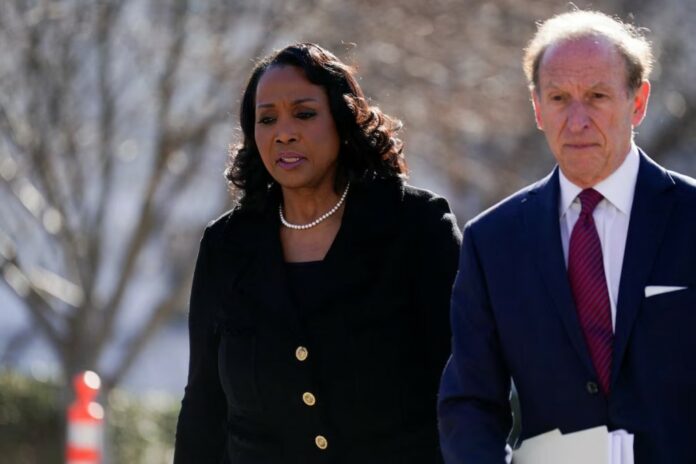
Washington, June 29 — The Supreme Court of the United States has temporarily blocked President Donald Trump’s attempt to remove Federal Reserve Governor Lisa Cook, in a landmark ruling that reinforces the institutional independence of the U.S. central bank while simultaneously expanding presidential authority over other federal agencies in a separate decision.
The 5–4 ruling underscores an intensifying legal and constitutional battle over the boundaries of executive power in the United States.
A Historic Challenge to Federal Reserve Independence
The case marks an unprecedented moment in American governance: no U.S. president had previously attempted to dismiss a sitting governor of the Federal Reserve System, an institution designed to operate independently from political influence to safeguard monetary stability.
President Trump sought to remove Lisa Cook, appointed in 2022, citing unproven allegations of mortgage fraud. Cook has strongly denied the accusations, arguing that they are a pretext for her removal due to disagreements over monetary policy, particularly interest rates.
The Court ruled that Cook cannot be removed without proper legal procedure and “for cause,” as required under federal law governing the Federal Reserve.
Chief Justice John Roberts, writing for the majority, emphasized that Fed governors do not serve at the pleasure of the president and can only be removed under a high legal threshold that protects institutional independence.
Deep Division on the Supreme Court
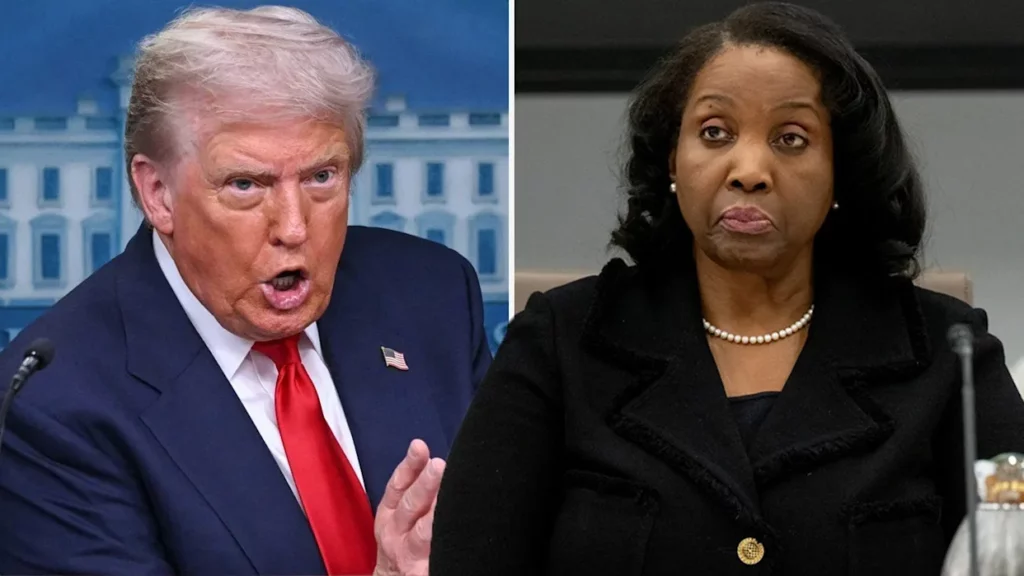
The decision exposed a sharp ideological divide within the Court. The majority included three liberal justices joined by Chief Justice Roberts and Justice Brett Kavanaugh, both conservative appointees.
The four dissenting conservative justices argued that the president should have broader authority to remove executive officials.
At the same time, the Court issued a separate 6–3 ruling in a case involving the Federal Trade Commission, allowing Trump to remove Commissioner Rebecca Slaughter. That decision overturned a decades-old precedent limiting presidential control over independent regulatory agencies, significantly expanding executive power in that context.
Implications for Federal Reserve Independence
In its ruling, the Court reaffirmed that the Federal Reserve occupies a unique constitutional and historical position among U.S. institutions.
Fed governors serve staggered 14-year terms and may only be removed “for cause,” a standard intended to shield monetary policy decisions from political interference.
The Court warned that weakening this protection could undermine global confidence in the U.S. financial system, one of the most influential central banking systems in the world.
Political and Economic Context
The dispute is part of a broader confrontation between President Trump and the Federal Reserve over interest rate policy. Trump has repeatedly criticized the Fed for not cutting rates more aggressively.
The administration has also taken steps that critics describe as attempts to pressure the central bank, including investigations into Federal Reserve Chair Jerome Powell over building renovation costs—an inquiry later dropped.
Supporters of Fed independence argue that such actions risk politicizing monetary policy, potentially destabilizing long-term economic decision-making.
Reactions from Key Figures
Lisa Cook welcomed the Court’s decision, stating that it protects the Federal Reserve’s obligation to make decisions independently, based on economic evidence rather than political pressure.
President Trump, however, criticized the ruling in a social media post, stating that his administration would continue efforts to address what he called “wrongdoing” and ensure accountability within the Fed.
A Broader Shift in Executive Power
Legal analysts say the rulings together reflect a complex and potentially contradictory shift in constitutional law:
- Stronger protections for the Federal Reserve’s independence
- Expanded presidential authority over other federal regulatory agencies
- Increased legal uncertainty over the limits of executive removal power
The combination of decisions could reshape how future presidents interact with independent institutions, setting the stage for further constitutional disputes.
What Comes Next
The case involving Lisa Cook will return to lower courts for further proceedings on the underlying allegations, while she remains in her position for now.
Meanwhile, the broader debate over the scope of presidential authority and institutional independence is expected to continue in both legal and political arenas, with significant implications for the balance of power in Washington.